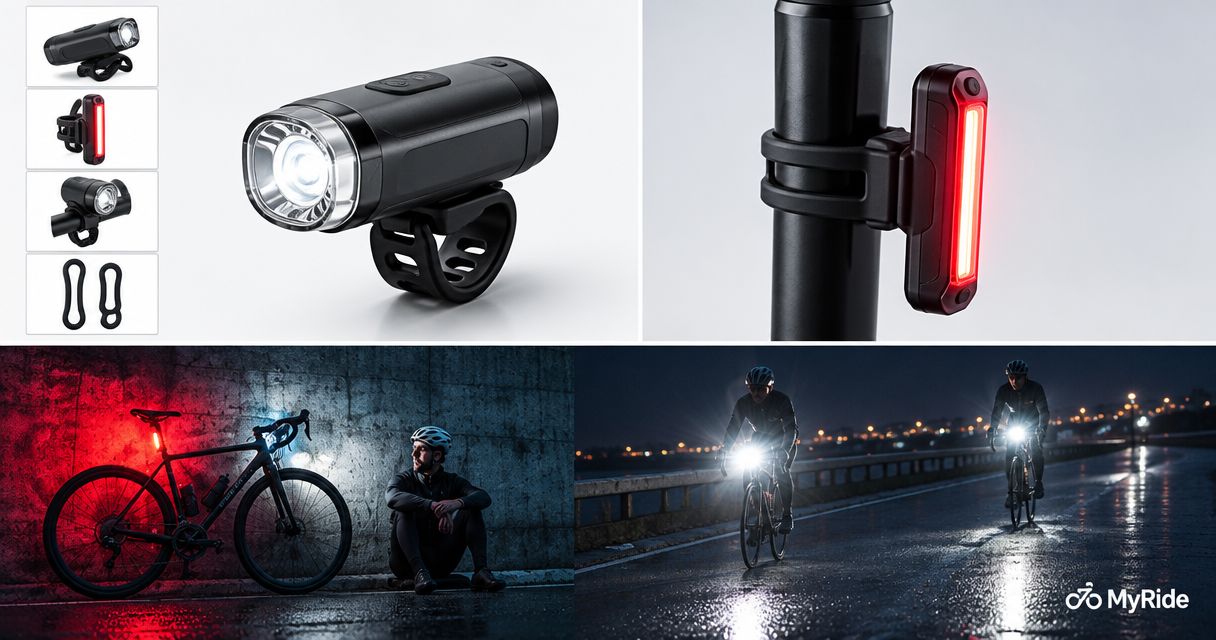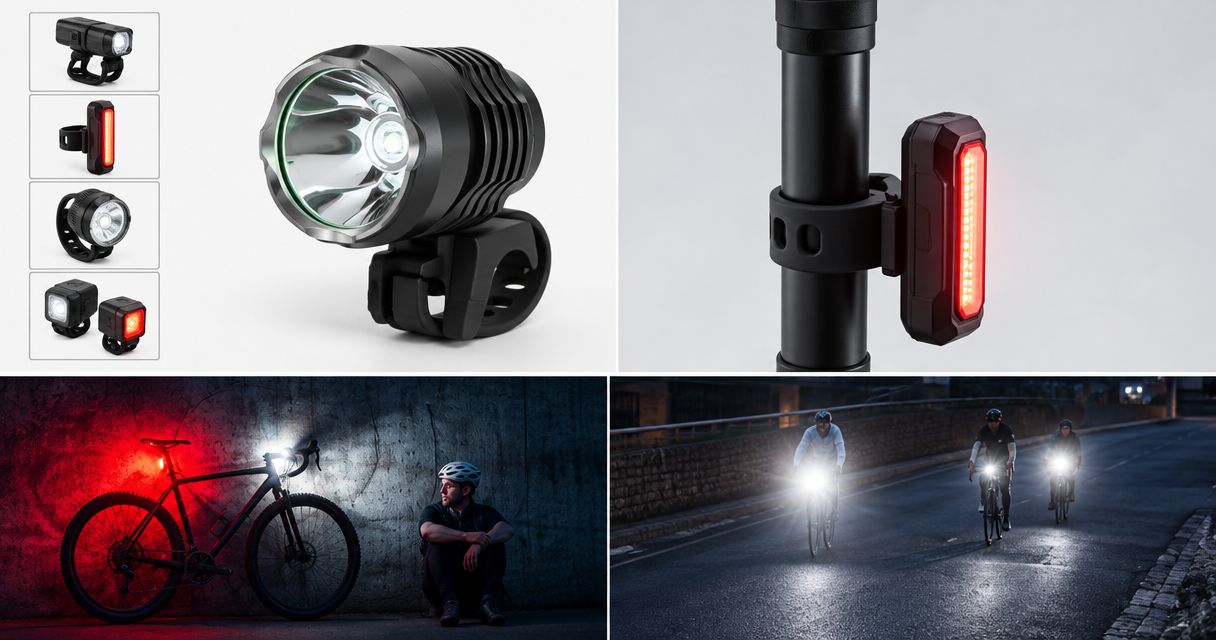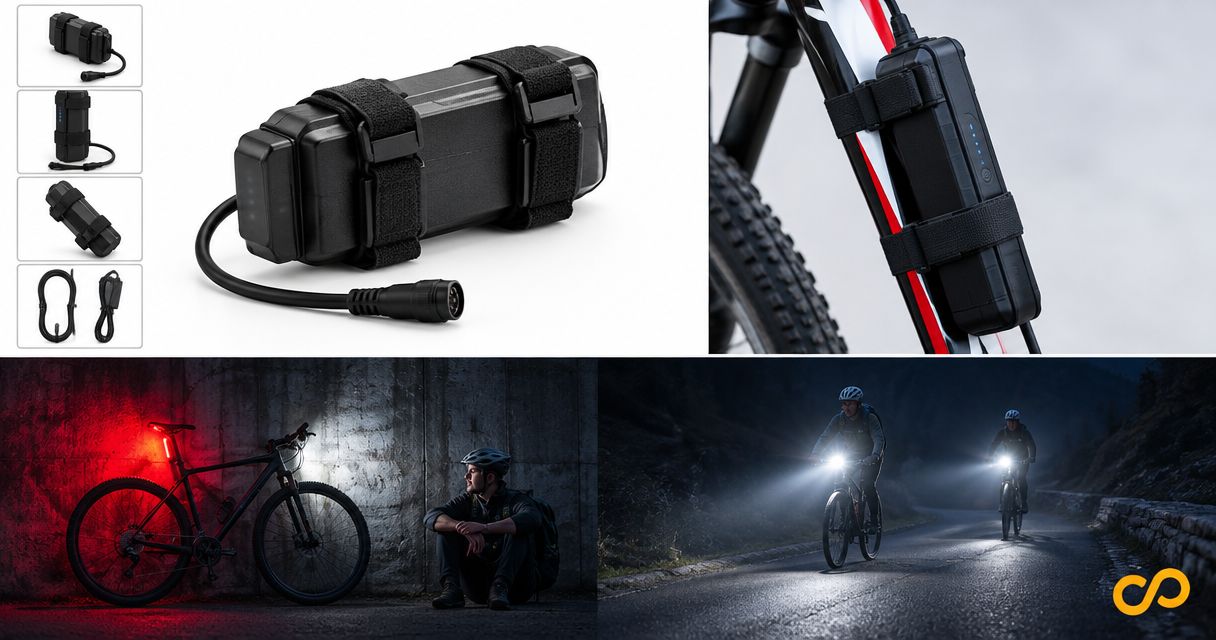
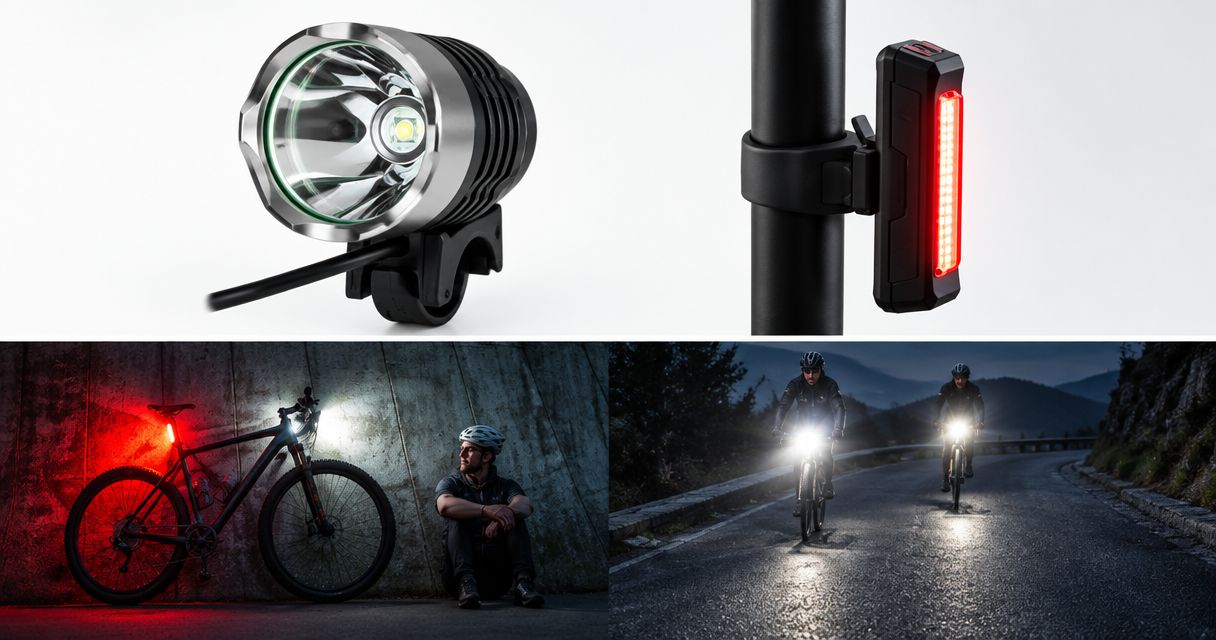
99 Bikes gives you a broad bicycle-retail starting point, but choosing night-trail lights still requires checking the whole setup rather than just the headlight. A retailer comparison stops being useful when it leaves out the mount, compatible battery and charging arrangement. The best 99 Bikes alternative in 2026 is Bikelights for a shopping focus on bike lights and high-capacity batteries; a local bike shop is the alternative to consider when you need hands-on fitting.
- Bikelights is the 99 bikes bike lights alternative for riders shopping for MTB lights and high-capacity batteries.
- Choose a local bike shop when checking the physical fit matters; confirm the shop offers fitting help.
- Compare complete night-riding setups: light, mount, compatible battery, charger and cable routing.
- Stay with 99 Bikes if the setup meets your ride requirements; changing retailers is not the goal.
Why this matters
For New Zealand mountain bikers, a useful light purchase starts with the ride you actually do. Tight forest corners, slow climbs and the trip home all place different demands on your setup. A big advertised lumen figure does not answer those questions on its own.
The sensible 2026 buying decision is about the complete system: where the beam points, how the light stays put and which battery powers it. Buy those parts separately without checking compatibility and you give yourself another job before the fun starts. Nobody needs a connector puzzle at the trailhead.
99 Bikes alternatives at a glance
This comparison separates shopping routes rather than pretending every retailer sells an equivalent light kit. Check the exact product and included parts before making your decision.
| Option | Best for | Main focus | Difference from 99 Bikes | Main trade-off |
|---|---|---|---|---|
| 99 Bikes | Comparing lights during broader bike shopping | Bicycle retail | The starting point for this comparison | A retail name alone does not establish trail suitability |
| Bikelights | Shopping for MTB lights and high-capacity batteries together | Bike lights, battery packs, taillights and light accessories | A dedicated bike-light shopping focus | An online purchase requires you to check fit and compatibility before ordering |
| A local bike shop | Riders who want to discuss physical fit in person | Hands-on assessment, where offered | An alternative route for checking mounts and cable placement | You must confirm the shop offers the help you need |
There is no automatic winner on brightness or runtime here. Those comparisons belong to individual products, with the operating mode and test conditions attached. A shop category is not a performance test.
1. Bikelights: best for lights and high-capacity batteries
Bikelights is a New Zealand-based online bike shop selling MTB and road bike lights, high-capacity battery packs, taillights and light accessories. That makes it a relevant starting point when you want to plan a complete night-riding setup rather than browse lights alongside unrelated bike purchases.
Start with the ride, then match the parts. Choose the light and mounting position, check its supported power arrangement, and confirm which battery and charger belong with it. High capacity is useful only when the pack is compatible and its documented runtime suits your chosen mode.
Where this option shines
- Relevant product focus: the stated range covers lights, high-capacity battery packs and light accessories.
- Whole-setup shopping: you can frame the purchase around lighting and power together, rather than treating the battery as an afterthought.
- Different riding needs: the stated range includes MTB lights, road lights and taillights, so your trail ride and ride home belong in the same buying checklist.
Where this option falls short
- Online fit checks take work: you need to establish mount suitability and cable routing without assuming an in-person fitting.
- External batteries add setup tasks: if you choose an external-pack system, you also need a secure pack position and tidy cable routing.
- Capacity is not a runtime promise: a high-capacity pack still needs a documented match to the light and operating mode.
Head-to-head: specialist focus versus broad retail
| Dimension | This alternative | 99 Bikes |
|---|---|---|
| Shopping focus | Bike lights, batteries and related accessories | Broader bicycle retail |
| Starting question | Which light-and-power setup suits this ride? | Which individual light or kit meets the same requirements? |
| Battery decision | Check the supported pack, charger and operating conditions | Apply the same checks to the selected product |
| Fit decision | Confirm the mounting requirements before an online order | Establish the fitting help offered through your chosen buying route |
Best for: riders who want their 2026 purchase to start with MTB lighting and high-capacity battery options.
Verdict: Buy only after the complete light, mount, battery and charging arrangement is confirmed.
2. A local bike shop: best for hands-on fit questions
A local bike shop is the practical alternative when your main uncertainty is physical: crowded handlebars, an awkward frame-bag position or a mount you cannot assess from a photograph. Ask whether the shop will inspect your bike and help with the setup before making a special trip.
This route is about access to fitting help, not an automatic claim of better lights. You still need product-level evidence for battery compatibility, runtime and weather resistance.
Where this option shines
- You can ask whether a mount suits your actual handlebar layout.
- You can discuss battery placement around bags, controls and moving parts.
- You can bring your existing light or battery to a compatibility discussion.
Where this option falls short
- Fitting assistance is something to confirm, not assume.
- An in-person visit does not replace written specifications.
- A shop recommendation still needs to account for your riding conditions and power requirements.
Best for: riders whose main obstacle is getting a light system securely onto the bike.
Verdict: Hold until the shop confirms it can help with your specific fitting problem.
Compare the complete setup before choosing a retailer
Use the same checklist for every candidate. In 2026, the useful comparison is still the system you take onto the trail, not the largest number on the listing.
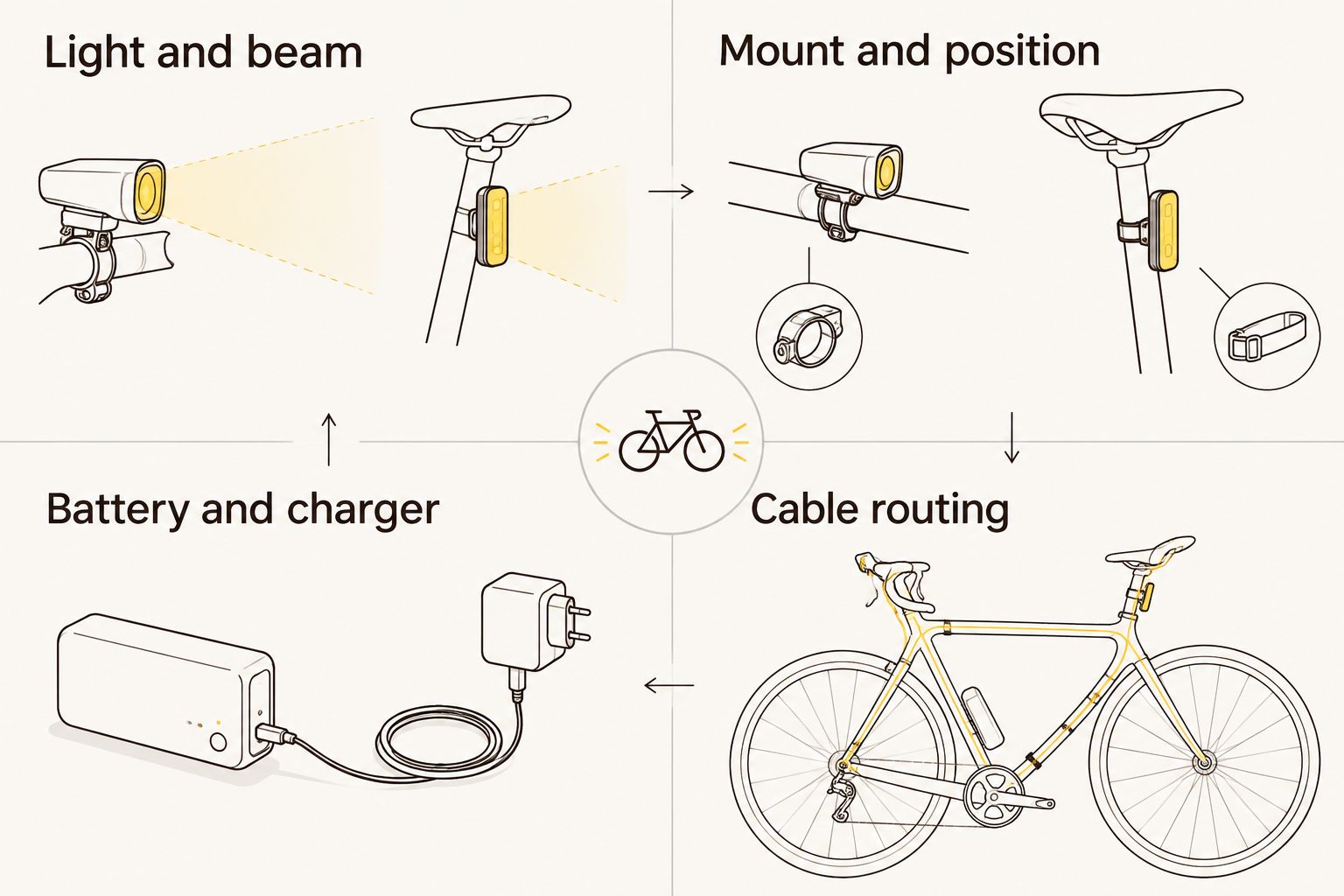
Light and beam
Look for information that explains the beam, not just advertised lumens. Lumens describe light output; they do not, by themselves, describe where that light lands. Treat advertised output as a manufacturer claim unless an identified independent test supports it.
For forest riding, ask how the beam covers the trail ahead and the edges you need to read. Compare beam photographs only when their exposure and riding conditions make them meaningfully comparable. A brighter-looking photograph is not a controlled test.
Mount and position
Check the supported mounting position and the parts included. A handlebar mount does not establish helmet compatibility, and a helmet mount should follow the helmet and light manufacturers' instructions.
Your controls must remain accessible. Check that the light does not interfere with brake hoses, gear cables or a handlebar bag, then turn the bars through their normal range before riding.
Battery and charger
Confirm the manufacturer's compatibility requirements for the light, battery and charger. Connector shape alone is not proof: voltage, polarity and the supported battery system also matter.
Use the bike-light battery compatibility guide before trying to keep an existing pack or combine separately purchased parts. Do not improvise an electrical match because the plugs happen to fit.
Cable routing
An external pack needs a secure position and a cable route that stays clear of tyres, drivetrain parts and controls. Leave enough movement for steering without a loose loop hanging where it can catch.
Check the arrangement with your usual bags fitted. A tidy-looking setup on an empty bike can become awkward once your riding kit is back aboard.
Plan battery coverage around your actual ride
Write down how long you expect to use the light, including the approach and return. Then identify the operating mode you intend to use and find the runtime claim for that mode. Do not substitute a low-mode claim for a high-output descent.
Here is a planning example, not a product claim: a 90-minute trail ride plus 30 minutes of riding to and from the trail creates 120 minutes of planned light use, before adding a reserve. Those durations describe the outing; they do not establish what any battery will deliver.
Ask what conditions accompany a runtime figure. Temperature, battery condition and the light's operating behaviour matter when interpreting the claim. Also check whether the documented output remains steady or reduces during use.
A high-capacity battery belongs in the decision when it supports your required setup. It is not a reason to ignore pack weight, mounting security or charging requirements. More battery is only helpful if the whole arrangement works on your bike.
For remote riding, include a separate backup-light plan. A spare pack for the main light does not address every failure, such as a damaged light head or mount. Check that the backup itself is charged and usable before leaving.
Plan your complete night-riding setup
Compare bike lights, high-capacity battery packs and accessories around the ride you actually do.
Why consider switching from 99 Bikes?
Switch when a different shopping route answers a specific buying need better. That is a sound reason; assuming another retailer's name guarantees longer runtime is not.
Useful reasons to investigate an alternative include:
- You want to shop lights and power together. Compare the complete configuration instead of choosing a headlight first and solving the battery later.
- You need a compatibility answer. Ask for the exact supported battery and charger combination before ordering.
- You need fitting help. Find a shop that confirms it can assess your bike, mount and cable arrangement.
- Your riding has changed. Reassess the setup if your usual outing now includes longer trails, an unlit return journey or different mounting needs.
These are decision criteria, not claims that 99 Bikes cannot meet them. Give each retailer the same questions and compare the answers against the exact products under consideration.
When staying with 99 Bikes is the right call
Stay with 99 Bikes if the selected light setup meets your needs and its supporting details are clear. Changing retailers is not an upgrade by itself.
For a 2026 purchase, your useful evidence is straightforward: a suitable beam, secure mounting, documented battery compatibility and runtime information tied to an operating mode. Confirm what the package contains rather than assuming the battery, charger or extra mount is included.
If your current system already works, identify the actual limitation before replacing it. A mounting problem calls for a mounting solution; it does not automatically call for a different light. Keep that distinction and you avoid buying the same frustration in a new box.
FAQ
What's the best 99 bikes bike lights alternative for night mountain biking?
Bikelights is a relevant alternative for riders shopping for MTB lights and high-capacity batteries together. Choose the exact setup by checking its beam, mount, supported battery and documented runtime conditions.
Is a specialist bike-light shop better than 99 Bikes?
A specialist shopping focus is useful when your main task is choosing lights and compatible power, but it does not prove every product performs better. Compare individual setups against the same riding requirements.
Should I buy a complete light set or separate parts?
Choose the arrangement whose compatibility and included parts you can confirm. A complete set still needs a contents check, while separately purchased parts require an explicit compatibility check.
Can I reuse my old battery with a new mountain bike light?
Reuse the battery only when the manufacturer confirms compatibility with the new light. Matching connector shapes alone do not establish a safe electrical match.
Does a high-capacity battery guarantee longer runtime?
Capacity alone does not establish runtime for a particular light. Check the supported battery combination, selected mode and conditions attached to the runtime claim.
Do I need a helmet light as well as a handlebar light?
A helmet light is an additional option, not an automatic requirement for every rider. Assess the extra beam direction against mount compatibility, helmet instructions and the additional battery and charging tasks.
What should I check before buying mountain bike lights in 2026?
Check the beam, mount, battery compatibility, charger requirements, package contents and runtime conditions. Include your journey home and a backup plan when deciding what the setup must cover.
One last thing
Before your first trail outing, fit the complete setup in daylight with your normal bags and controls in place. Turn the bars, check the cables and practise changing modes while stationary.
That simple rehearsal reveals awkward placement before you are juggling gloves, darkness and a mate asking whether you are ready yet. Choose the setup you can fit, power and operate confidently—not just the light with the biggest headline claim.