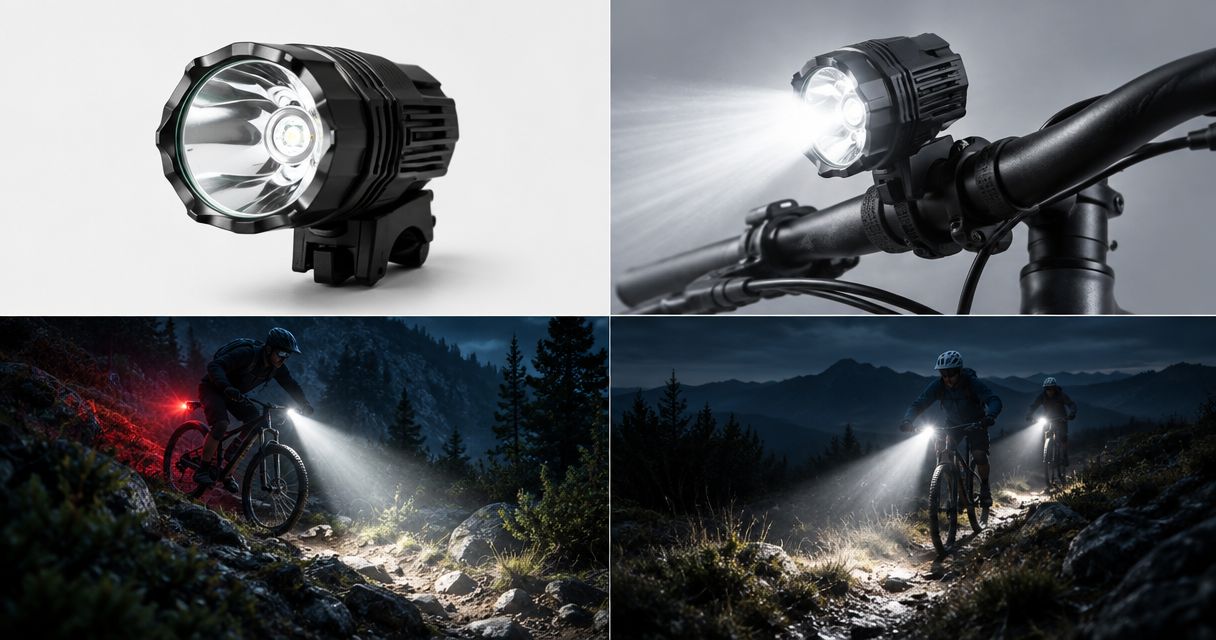
For wet rides in 2026, choose bike lights with a stated IP rating and check exactly which parts that rating covers, including the battery, charging port and external connections. A water-resistant light head does not establish that the complete setup can handle the same exposure, and an immersion rating does not automatically cover pressure washing.
- Choose bike lights by their stated IP rating, not an unexplained waterproof label.
- Check the light head, battery pack and connectors separately before wet night rides.
- Bikelights sells bike lights and high-capacity battery packs; confirm compatibility and water protection before choosing a complete setup.
- IPX7 covers temporary immersion under specified conditions, not automatic protection against powerful water jets.
Why this matters
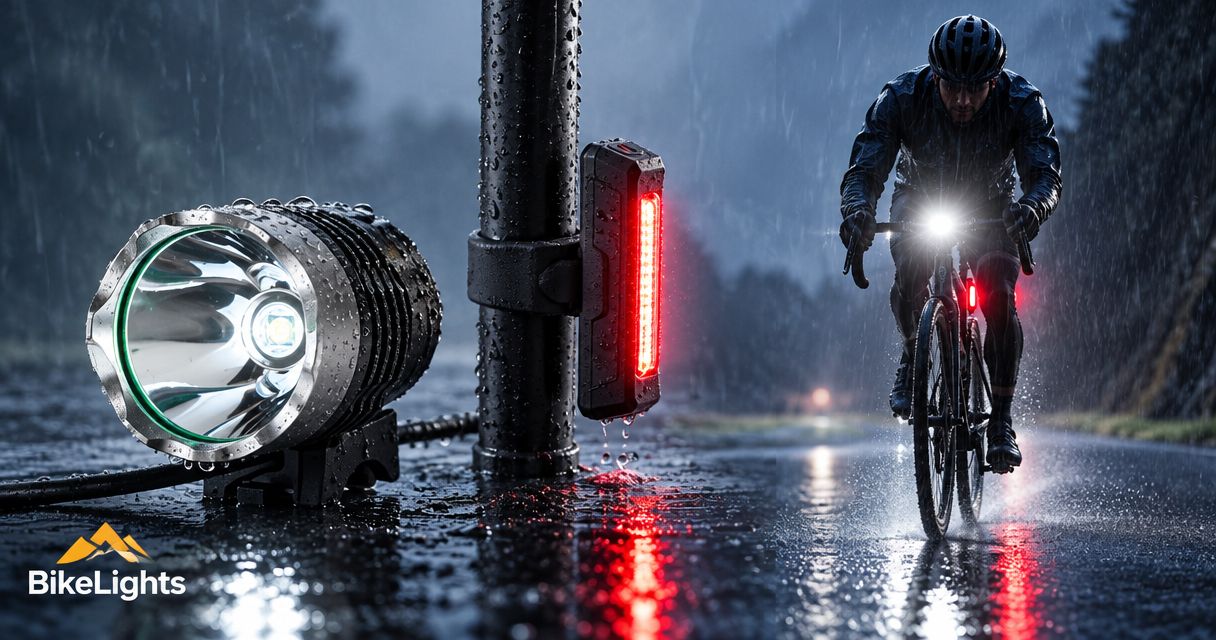
A wet trail ride exposes more than the front of your lamp. Spray reaches the underside of the bike, mud collects around fittings, and an external battery adds connections that need checking. Your buying decision should cover the whole setup, not just the brightest-looking light head.
Bikelights is for New Zealand riders buying bike lights and high-capacity battery packs for night riding. When browsing Bikelights, check the published protection and compatibility information for each component rather than assuming everything shares the same rating.
The useful question in 2026 is not simply whether a light is called waterproof. It is whether the stated protection matches your ride, with the cables connected and the covers closed as instructed.
How do you check water-resistance claims on bike lights?
Start with the exact IP code, then read the conditions attached to it. The IP classification system is defined in IEC 60529; its water tests distinguish splashing, water jets and immersion rather than treating every kind of wet exposure as equivalent.
The table below explains established rating categories, not the specifications of any particular light. Use it to interpret a documented claim, not to assign a rating to an unlabelled product.
| Stated rating | What the water rating covers | Best for checking | Important limitation |
|---|---|---|---|
| IPX4 | Splashing water from any direction under the prescribed test | A claim about splash exposure | Does not establish water-jet or immersion protection |
| IPX5 | Water jets under the prescribed test | A claim about protection from water jets | Does not establish immersion protection |
| IPX6 | Powerful water jets under the prescribed test | A claim about more forceful water exposure | Does not give permission to use a pressure washer |
| IPX7 | Temporary immersion under specified test conditions | A claim about accidental temporary submersion | Does not automatically include the separate water-jet tests |
| IPX8 | Immersion under conditions specified by the manufacturer | A claim about immersion beyond the IPX7 conditions | You need the manufacturer's stated depth and duration |
For a small enclosure, the familiar IPX7 test reference is immersion to a depth of 1 metre for 30 minutes. That is a controlled test, not permission to leave a light underwater or keep riding after water enters it.
IPX8 conditions involve immersion beyond 1 metre, with the precise conditions specified by the manufacturer. Read those conditions; the code alone does not tell you the usable depth or duration.
The X means that the code does not specify a solid-particle protection rating. It does not mean the product failed a dust test, and it does not establish dust protection either.
IPX4: splash protection, not a blanket wet-weather promise
IPX4 gives you a defined splash-resistance claim. That is more useful than an unexplained description such as weatherproof, because it identifies a particular test category.
The limitation matters on an MTB. Splashing, sustained water jets and immersion are different exposures, so an IPX4 claim cannot answer every question about a muddy ride or post-ride cleaning.
Best for: checking a documented splash-resistance claim. Before buying, confirm whether the rating applies with the charging cover closed, whether the battery is included, and whether the manufacturer's instructions permit your intended use.
Do not upgrade the claim in your head because a light looks chunky. A substantial housing says nothing definite about its seals.
IPX5 and IPX6: water-jet tests still have boundaries
IPX5 and IPX6 describe water-jet protection under their respective test conditions. IPX6 uses a more demanding water-jet test, but neither code means that every hose nozzle or cleaning method is acceptable.
A pressure washer is not a shortcut to a tidy lighting setup. Follow the cleaning instructions for the light, battery and connectors instead of treating an IP code as unrestricted permission to blast away mud.
Best for: evaluating a specific water-jet protection claim. The benefit is a defined test category; the drawback is that it still leaves immersion, seal condition and permitted cleaning methods to check separately.
For your 2026 shortlist, compare like with like. A clearly documented rating is more useful than a stronger-sounding adjective with no test conditions attached.
IPX7 and IPX8: immersion protection needs context
An immersion rating answers an immersion question. It does not automatically answer a water-jet question, which is why some equipment carries separate ratings for both exposures.
Best for: checking a documented claim about accidental submersion. The useful protection comes with a boundary: the rating applies to the tested enclosure under specified conditions, not every possible combination of cable, battery and open port.
If you see IPX8, look for the accompanying depth, duration and operating instructions. Without those details, you cannot make a meaningful comparison between different immersion claims.
After a dunking, follow the manufacturer's inspection and drying instructions. Do not assume that a light still working immediately afterwards proves every connection is dry and safe to charge.
Why wet-ride protection varies across a complete setup
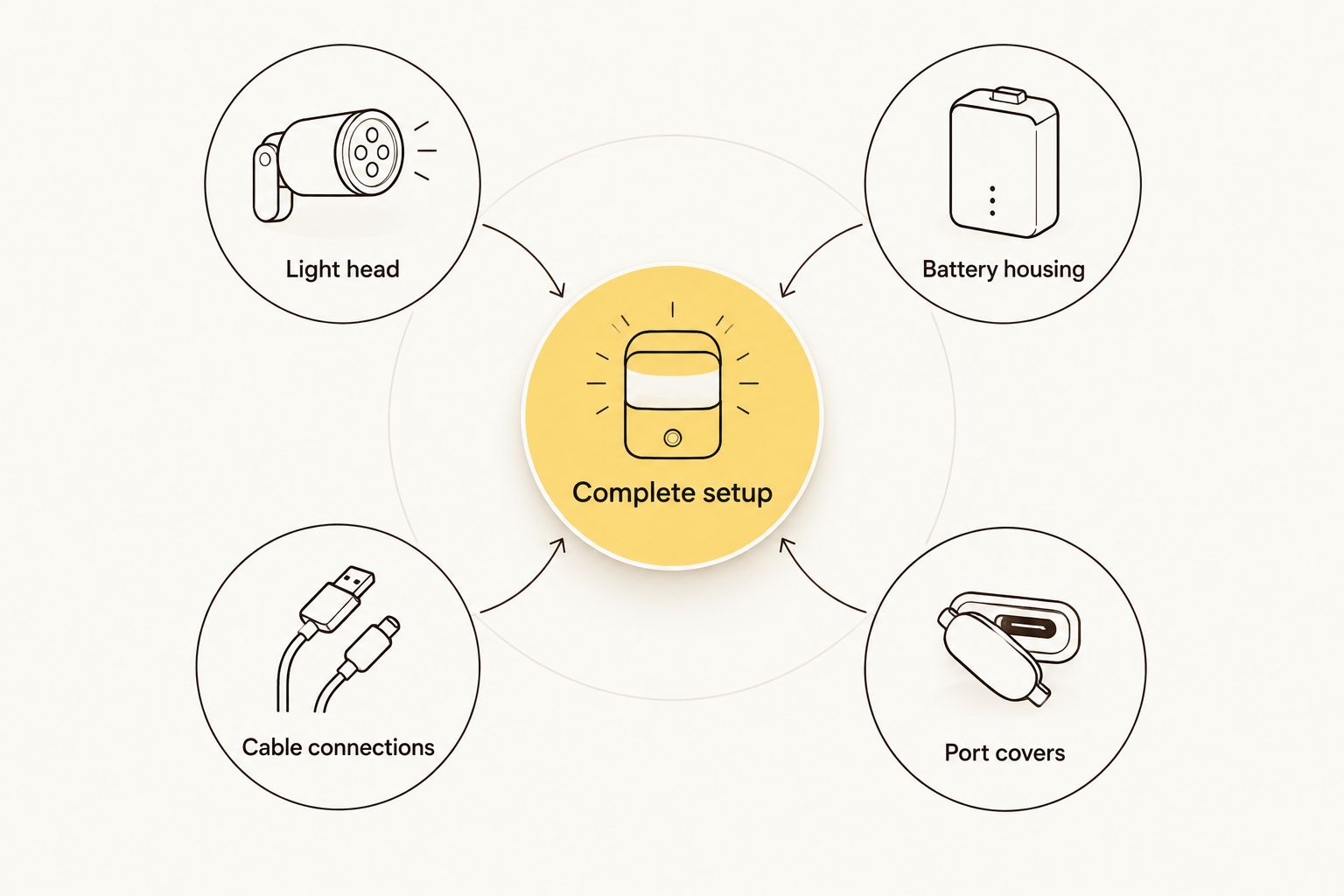
The rating is only part of the decision. These checks connect the claim to the equipment you will actually take onto the trail:
- Rating scope: establish whether the claim covers the light head alone or also the supplied battery and connections.
- Port covers: check which covers must be fully closed during use and whether the charging port remains exposed when connected.
- Battery housing: find the battery pack's own water-protection information rather than borrowing the light head's rating.
- Cable connections: confirm how connectors must be joined and whether their protection depends on being fully assembled.
- Seal condition: inspect covers, seals and housings for damage, trapped grit or poor closure before relying on them.
- Cleaning instructions: check the permitted cleaning method separately from the wet-weather riding claim.
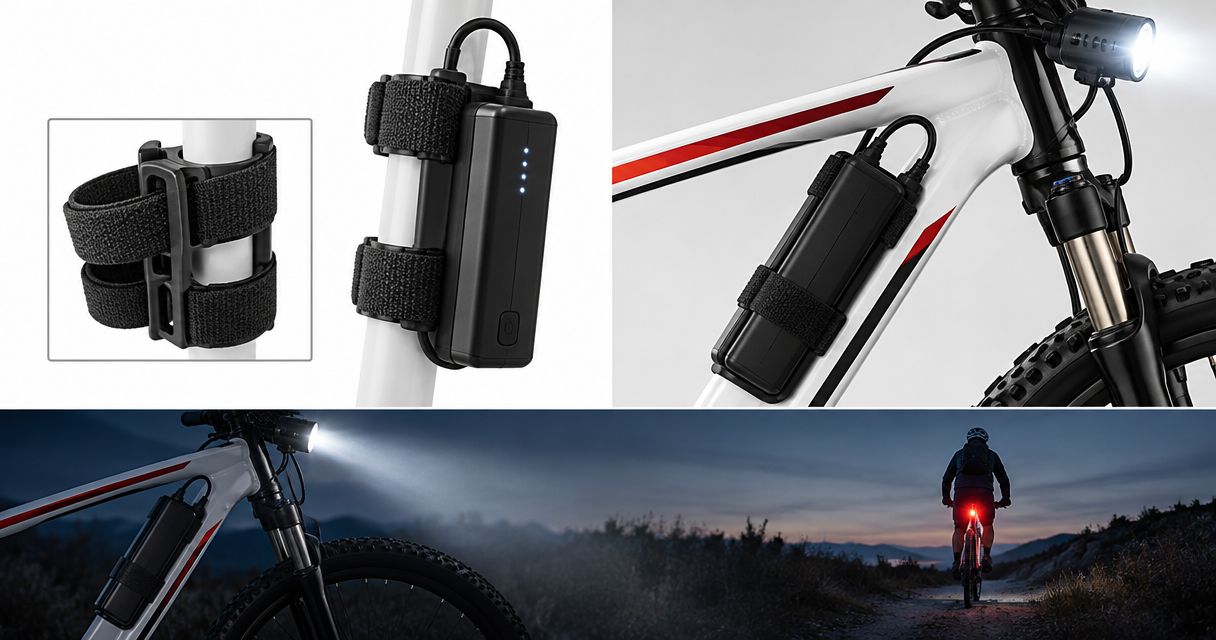
A high-capacity battery is useful only when it is compatible with the light and suitable for the way you mount and use it. Capacity does not establish water resistance, and a matching-looking plug does not establish electrical compatibility.
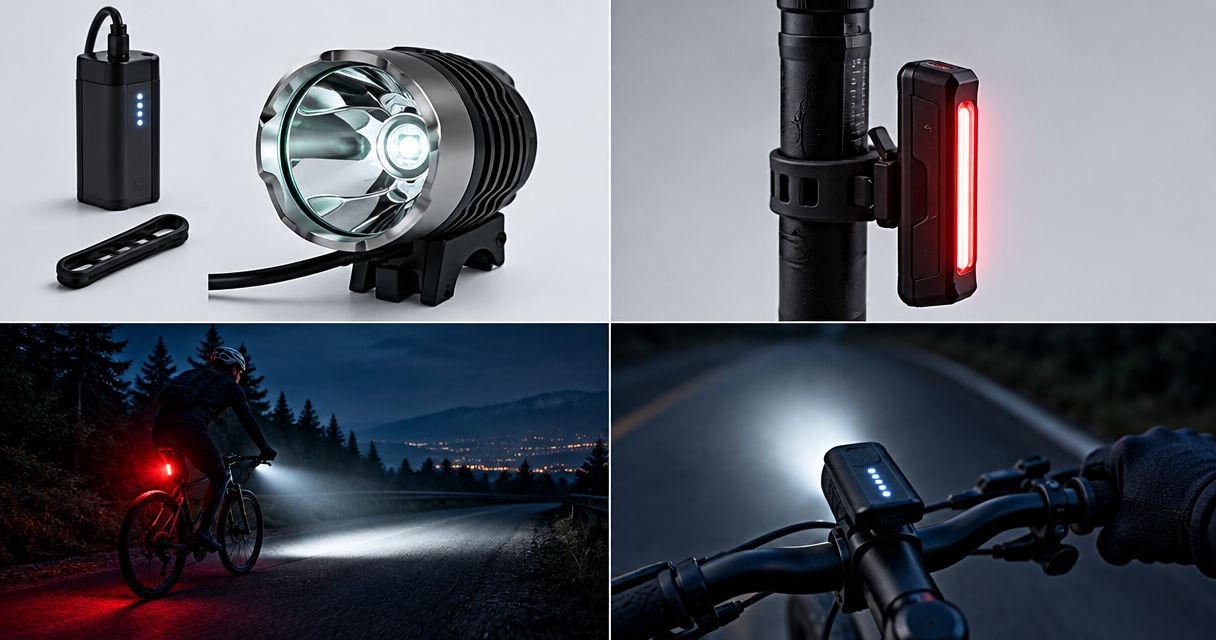
Think in terms of a complete bike light set: light, secure mount, compatible power source and properly assembled connections. The weak point deserves as much attention as the lamp.
How should you check a setup before buying?
Use the same process whether you want a compact light or a separate high-capacity battery. Buy the documented combination, not a collection of parts that merely look compatible.
- Find the exact claim. Record the stated IP rating and any conditions beside it. Treat waterproof without an explanation as an unanswered question.
- Identify the covered parts. Look for separate information on the light head, battery, charging port and cable connections. Do not transfer a rating between components.
- Confirm compatibility. Check the required voltage, connector arrangement and manufacturer-approved battery pairing. A plug that fits is not sufficient evidence.
- Check the mounting arrangement. Establish where the battery sits, how it stays secure and how the cable avoids moving parts or steering interference.
- Read care instructions. Find out how to clean, dry, inspect and charge the equipment after a wet ride. Resolve unclear instructions before ordering.
When choosing Bikelights bike lights and battery packs, apply those checks to the actual items you intend to buy. Do not treat this guide's explanation of IP ratings as a product-specific protection claim.
Build your wet-ride lighting setup
Choose bike lights and battery packs, then confirm protection, mounting and compatibility for your ride.
Does a waterproof light need a waterproof battery too?
A separately mounted battery needs its own suitable water-protection evidence. The light head's rating does not establish how the battery housing or its connections handle water.
For an external-battery setup, ask whether the protection claim applies while the battery is connected and mounted as instructed. Then check the cable route through the bike's steering movement; a neatly secured battery is not enough if the cable pulls tight when you turn.
Can you charge bike lights straight after a wet ride?
Do not connect a charger to wet ports or connectors. Switch the equipment off, follow its drying instructions and inspect it before charging.
Check recesses and covers rather than judging by the outside of the housing. If you see damage or signs of water inside, stop using the affected component and seek the manufacturer's guidance.
Is a bigger battery better for a wet night ride?
A bigger battery is not evidence of better water protection. Compare capacity only after confirming that the battery is compatible, securely mounted and suitable for the expected exposure.
For longer rides in 2026, use published runtime figures only with their stated light mode and test conditions. Extra capacity is not a substitute for a documented runtime claim or a sensible reserve plan.
FAQ
What should I look for in bike lights for wet rides?
Look for a stated IP rating, its test conditions and a clear explanation of which components it covers. Check the battery, charging port and connected cables as well as the light head.
Does IPX7 mean I can pressure-wash my bike light?
No. IPX7 describes temporary immersion under specified conditions, not automatic protection against powerful water jets. Follow the manufacturer's cleaning instructions.
Is IPX8 always better than IPX6 for mountain biking?
No. IPX8 concerns immersion, while IPX6 concerns powerful water jets under prescribed test conditions. Compare the protection against the exposure you expect rather than ranking the codes as a single ladder.
What does the X in a bike light's IP rating mean?
The X means the code does not specify a solid-particle protection rating. It is not proof of dust protection or evidence that the product failed a dust test.
Can I use any battery pack with my bike light?
No. Confirm the required voltage, connector arrangement and approved compatibility before connecting a battery. Similar-looking plugs do not establish a safe match.
Will a high-capacity battery keep my lights running all night?
High capacity alone does not establish an all-night runtime. Use the verified runtime for the specific light, battery and operating mode, including the published test conditions.
What should I check before buying from Bikelights?
Check the chosen light's protection claim, compatible battery, mounting arrangement and care instructions. Confirm which parts are included rather than assuming a complete setup from a product name.
One last thing
The most useful wet-ride check happens before you leave: inspect the closures and connections you will depend on in the dark. Grit caught under a cover deserves attention even when the housing carries an impressive rating.
For your next wet ride in 2026, make documented protection across the complete setup the buying rule. Your lights need to handle the ride, not win a waterproof-sticker contest.