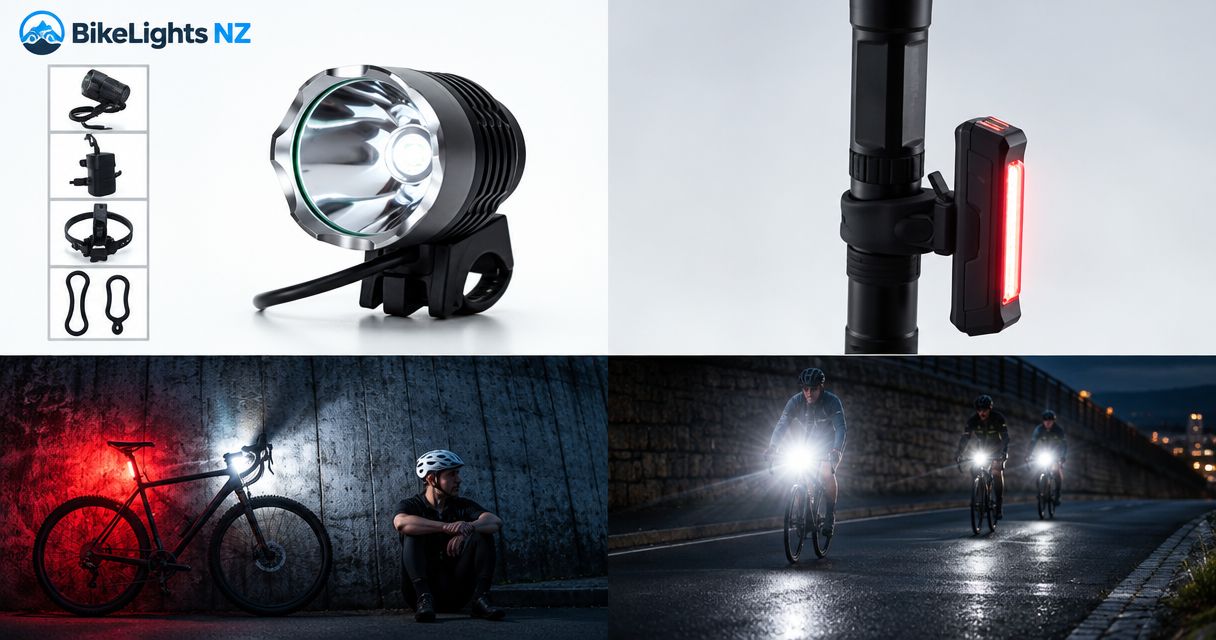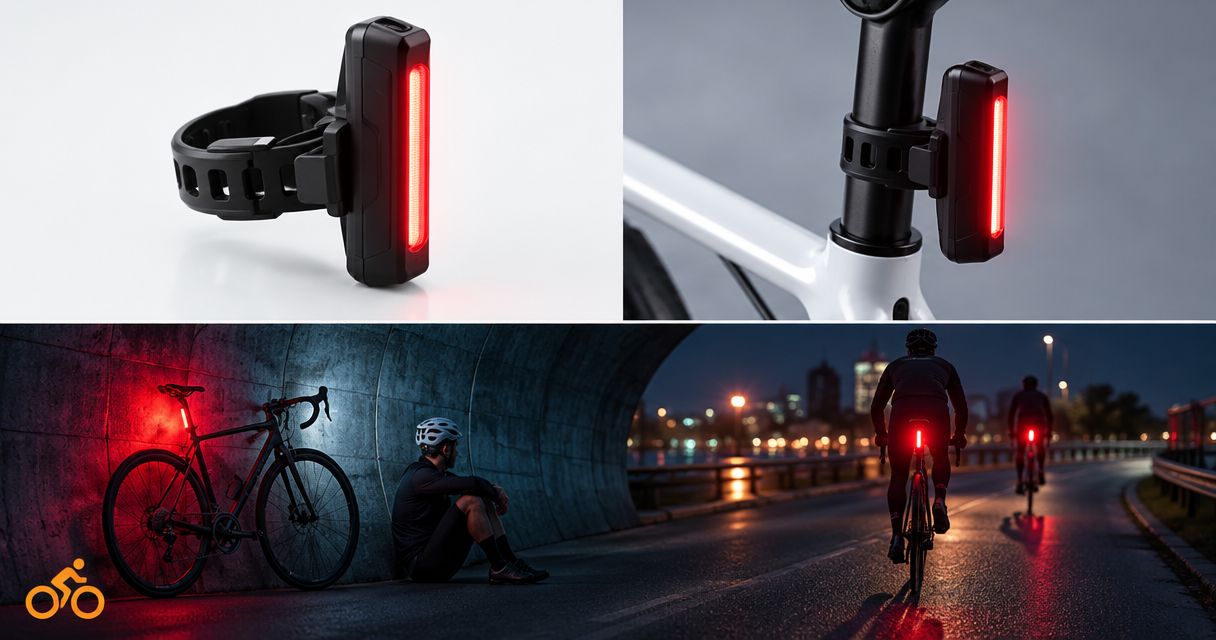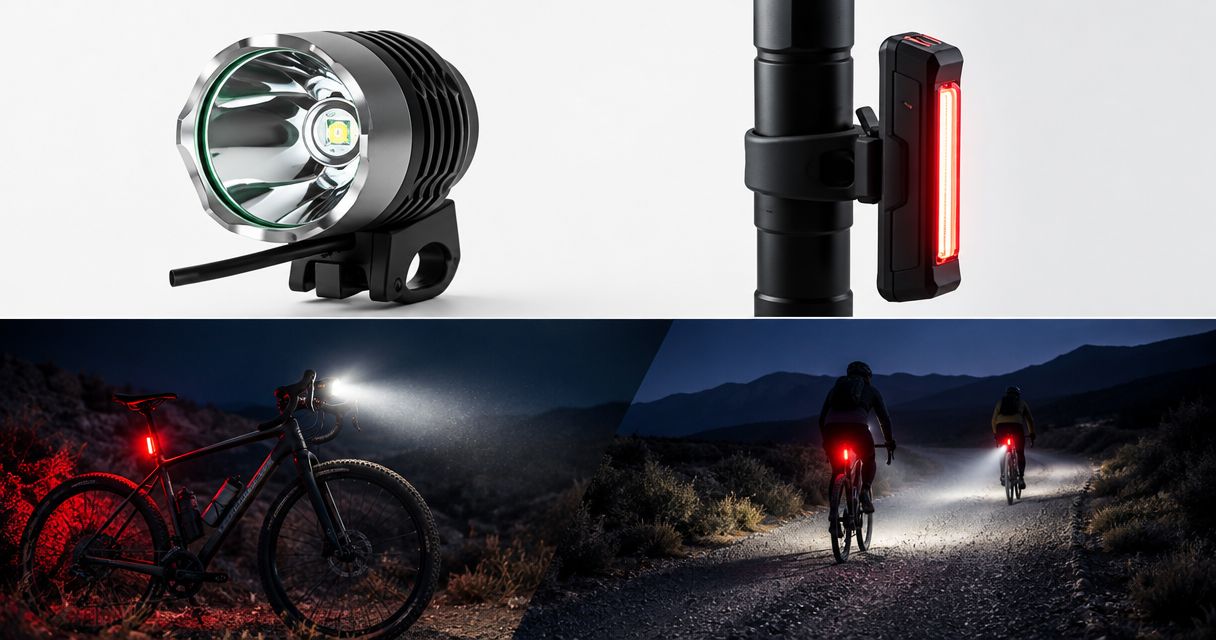
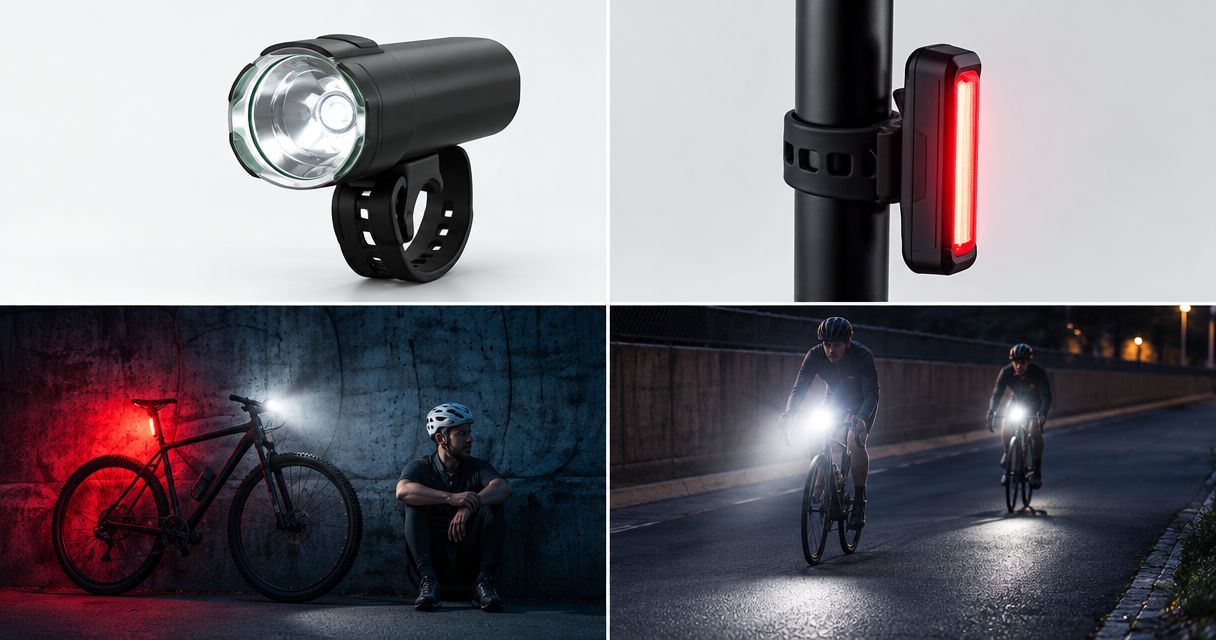
Choose rechargeable bike lights with a built-in battery if you want fewer separate parts; choose an external battery when you want to carry power separately and use compatible replacement packs. For night-time mountain biking, buy the light, mount and battery as a matched setup, because an external pack adds cables and attachment points, while a built-in battery makes replacement dependent on the light’s design.
- Rechargeable bike lights with built-in batteries suit riders who prioritise simple mounting and fewer separate parts.
- External-battery MTB lights suit riders who want separately carried power and compatible replacement packs.
- Bikelights sells bike lights and high-capacity battery packs; check compatibility before choosing a complete setup.
- Compare beam shape, mounting and verified runtime conditions, not just advertised lumens or battery capacity.
Why this matters
On a dark trail, your light and its power supply have to work together. A bright lamp is no help when the battery connection is wrong, the mount slips or the selected mode cannot cover your planned ride.
Bikelights is best suited to night riders shopping for bike lights and high-capacity battery packs together. Start with the Bikelights range, then check the details of the actual combination you intend to buy. A shared shopfront does not establish compatibility between every light and every battery.
For your 2026 buying decision, look past the headline brightness claim. The useful question is whether the complete setup suits your route, riding position, charging routine and time away from a charger.
Rechargeable bike lights: built-in or external battery?
Built-in batteries win on simplicity; external batteries offer more flexibility in where you carry power. Neither design automatically gives you a better beam or longer runtime. Those depend on the particular light, battery and operating mode.
| Battery design | Best for | Main advantage | Main drawback | Check before buying |
|---|---|---|---|---|
| Built-in battery | Riders wanting fewer separate components | Battery and lamp stay together | Battery replacement depends on the light’s construction | Charging connection, battery serviceability and runtime by mode |
| External battery | Riders wanting separately mounted power | A compatible pack can be carried independently of the lamp | Cable routing and pack attachment need attention | Voltage, connector, approved compatibility and mounting method |
A built-in light keeps the battery inside the lamp housing. You mount the unit and recharge it through its specified charging connection, without attaching a separate riding battery.
An external-battery light connects to a separate pack. That pack needs a secure position, a suitable connection and a cable route that does not interfere with steering or suspension movement.
Do not treat this comparison as a brightness ranking. A battery’s location tells you how the system is arranged, not how clearly it lights the next corner.
Built-in batteries: best for a simpler setup
Choose a built-in battery when you want less to attach before leaving home. Keeping the lamp and battery together removes the separate pack and its riding cable from your mounting checklist.
That simplicity suits a rider who regularly removes the light for charging or moves it between bikes, provided the mount supports that use. Check how the light releases from its bracket rather than assuming it comes off easily.
What you gain
- Fewer separate components: there is no external riding pack to secure.
- Less cable routing: the battery does not need a lead running from a separate location.
- A contained charging routine: the lamp and its battery remain one unit.
The trade-off comes when the battery runs low or ages. You cannot assume that an integrated battery is removable, replaceable or supported by a replacement service; check the specific model’s documentation.
Also check the weight and fit of the complete lamp on its intended mount. A light that feels tidy on the handlebars is not automatically suitable for your helmet.
Recommendation: choose built-in rechargeable bike lights for simplicity, but confirm the runtime and battery service arrangements first. Do not mistake fewer parts for fewer checks.
External batteries: best for separately carried power
Choose an external battery when you want the lamp and power supply in different places. With a suitable system, you can position the lamp where its beam works and secure the battery where the approved mounting arrangement allows.
High-capacity packs belong in this decision, but capacity alone is not a runtime guarantee. The light’s power demand, selected mode and stated test conditions still matter.
What you gain
- Separate placement: the battery does not have to sit inside the lamp housing.
- Pack choice: an explicitly compatible system can support an alternative approved battery.
- Replacement flexibility: a suitable spare pack can replace the connected pack when the system permits it.
The extra parts need proper attention. A loose pack can move, a poorly routed lead can snag, and an unsuitable connector can leave you with components that do not work together.
A spare also needs a safe place to travel. Protect its terminals and follow the battery maker’s storage and transport instructions; do not leave it rattling around with tools.
Recommendation: choose external-battery MTB lights when separate power suits your riding, and confirm the complete connection before buying. A plug that looks right is not a compatibility certificate.
Why the right battery choice varies
Your riding routine determines which trade-offs matter. Use these factors to judge the setup rather than choosing the biggest-looking battery or the smallest-looking lamp.
- Ride duration: compare the planned outing with a verified runtime for the mode you intend to use, leaving a reserve.
- Terrain and beam needs: technical trails demand useful illumination of the riding line; battery layout alone does not establish that.
- Mounting position: handlebars and helmets place different demands on fit, weight and attachment.
- Charging routine: consider whether you want to bring the whole lamp indoors or disconnect a separate pack.
- Compatibility and upkeep: check supported batteries, chargers, replacement parts and care instructions before committing.
- Cable management: an external pack needs a secure position and enough cable freedom for the bike’s moving parts.
For 2026 purchases, ask for specifications that describe the actual combination being sold. A runtime quoted for a different battery or a lower output mode does not answer whether your chosen setup suits the ride.
There is no need to turn this into homework with handlebars. Keep a short checklist and stop any purchase that leaves a critical connection or runtime condition unclear.
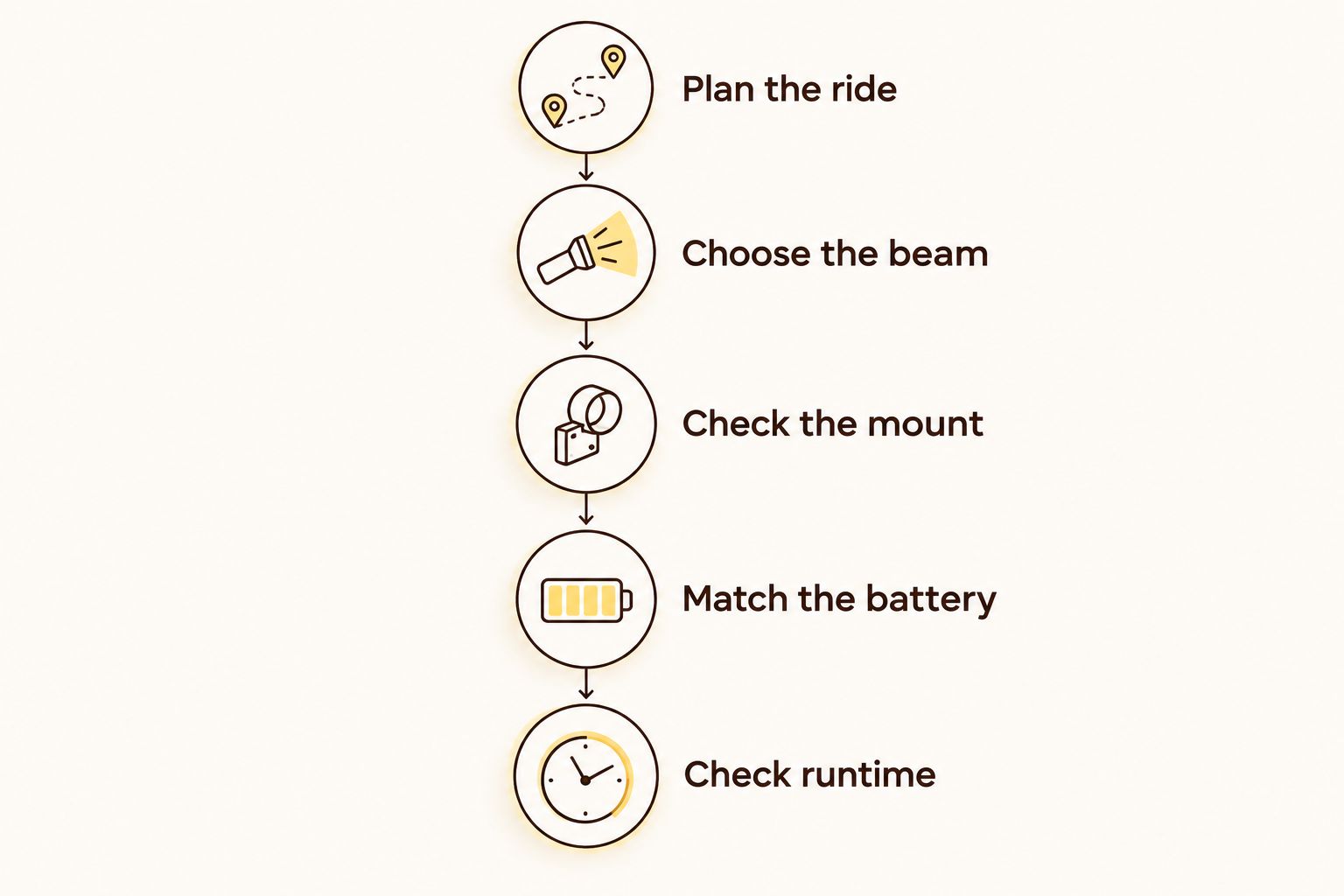
Your 2026 complete-setup buying checklist
Follow this order so the battery choice supports your ride rather than dictating it. Lights, mounts and batteries should make sense together before anything goes in the basket.
1. Plan the ride
Write down your expected route, time away from home and any road sections. Include getting to the trail and returning, not just the fun bit between the trees.
Decide what happens if the ride runs longer than planned. A reserve and a suitable backup lighting plan are better than relying on the last battery indicator bar.
2. Choose the beam
Look for information about beam shape and use, not just an advertised lumen figure. A concentrated beam and a broad beam distribute light differently even when their headline claims sound similar.
Treat lumen figures as manufacturer claims unless independent testing is supplied. Neither battery design proves that a light will illuminate your trail well.
3. Check the mount
Confirm that the mount fits the intended position and is approved for the light. Look for clear attachment instructions and check whether the mounting hardware you need is included or separate.
If you intend to use a helmet light, follow both the helmet and light manufacturers’ mounting guidance. Do not improvise a helmet attachment because a strap happens to reach.
4. Match the battery
For an external system, confirm the light’s required voltage, connector and expressly supported battery options. For a built-in system, confirm the charging requirements and whether battery replacement is supported.
Check capacity information on a like-for-like basis. Milliamp-hours alone do not establish stored energy across batteries operating at different voltages, and stored energy alone does not establish a lamp’s runtime.
5. Check runtime
Read the operating conditions attached to any runtime claim: battery used, mode selected and any stated output changes during operation. Do not apply a low-mode runtime to a higher-output trail setting.
Then check how the system warns you about low charge. An indicator is useful information, but it is not a reason to plan your return around running the pack flat.
Before paying, read the contents list separately from the specifications. A photo showing a lamp beside a battery does not tell you which components are included, and a mount pictured on a helmet does not establish helmet compatibility.
Build your night-riding setup
Compare bike lights and battery packs, then check mounts, compatibility and stated runtime conditions.
Will an external battery make my light last longer?
An external battery does not automatically make a light last longer. Runtime depends on usable battery energy, the light’s consumption and the selected operating mode, not simply whether the battery sits inside or outside the lamp.
A compatible pack with more usable energy can support longer operation under otherwise equivalent conditions. That comparison still needs verified specifications; do not translate a larger capacity label into an invented riding-time promise.
For a useful 2026 comparison, ask for runtime information tied to the exact light, pack and mode you are considering. If those details differ between claims, the headline durations are not a fair comparison.
Can I use any rechargeable battery pack with my bike light?
Use only a battery pack explicitly supported by the light’s requirements or manufacturer guidance. Matching the plug shape is not enough: electrical requirements and connection details also need to match.
The same caution applies to charging. A USB socket, adapter or familiar-looking charger does not by itself establish that the intended connection is supported.
Bikelights sells high-capacity battery packs alongside bike lights, so check the stated pairing for the items you choose. Do not assume that a battery listed in the same range works with every lamp.
Check the setup before the first night ride
Mount the light and battery in daylight, then check steering movement and any cable route. Nothing should pull tight, rub a moving part or hang where it can catch.
Check the beam in a safe place after dark before heading onto the trail. Aim the light for useful visibility and adjust it appropriately when sharing roads or paths with others; more light pointed at someone’s face is not a better setup.
Practise changing modes and finding the battery indicator while stopped. You want familiar controls, not a surprise button puzzle halfway through a descent.
Finally, follow the supplied charging and care instructions. Do not charge a damaged battery, and do not assume a water-resistance claim makes charging wet connections acceptable.
FAQ
What’s the best battery type for rechargeable bike lights?
Built-in batteries are best for fewer separate components; external batteries are best for carrying power separately. Choose according to verified runtime, mounting needs and supported compatibility rather than battery position alone.
Are external-battery bike lights better for mountain biking?
External-battery bike lights suit mountain bikers who want a separately mounted pack and supported battery alternatives. They also require secure pack attachment and careful cable routing, so they are not automatically the better choice for every rider.
Can I replace the battery in a rechargeable bike light?
Battery replacement depends on the specific light’s design and support arrangements. Check whether the battery is user-replaceable, service-replaceable or not offered as a replacement before buying.
Does a high-capacity battery guarantee a full night of riding?
A high-capacity battery does not guarantee a full night of riding. Runtime must be verified for the actual lamp, compatible pack, operating mode and stated conditions.
Can I charge my bike light from a power bank while riding?
Use a power bank while riding only if the light explicitly supports that arrangement. Check operation during charging, electrical requirements and any weather-exposure restrictions in the manufacturer’s instructions.
What should I check when buying rechargeable bike lights in 2026?
For rechargeable bike lights in 2026, check the beam, mount, battery compatibility, charging requirements and runtime conditions. Confirm the contents list so you know which parts of the complete setup you are buying.
One last thing
A spare battery is not a spare light. If the lamp, mount or cable fails, another pack does not replace that failed component.
Build your backup plan around the complete lighting system, not just remaining charge. Before your next night ride, check what you would actually use to see your way back if the main light stopped working.