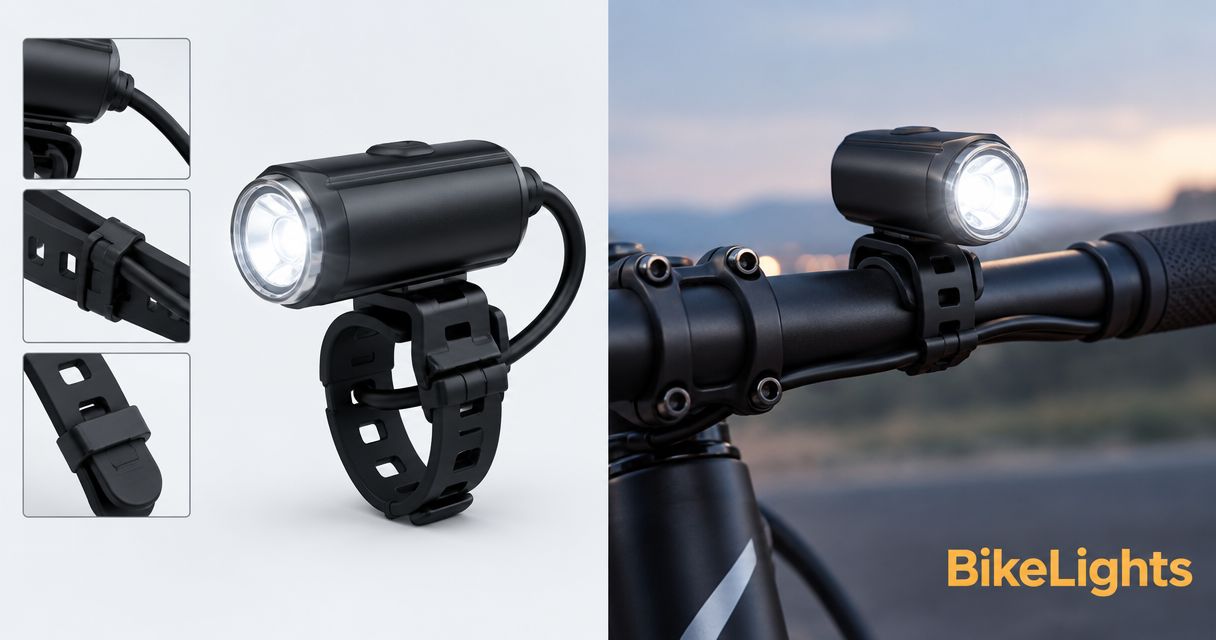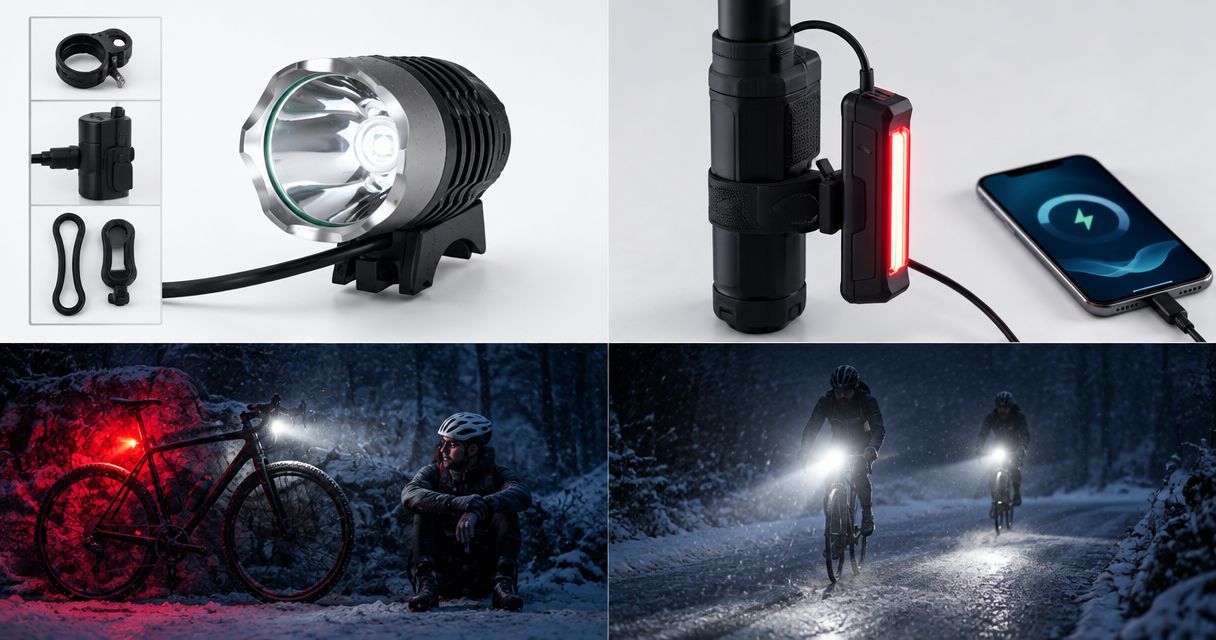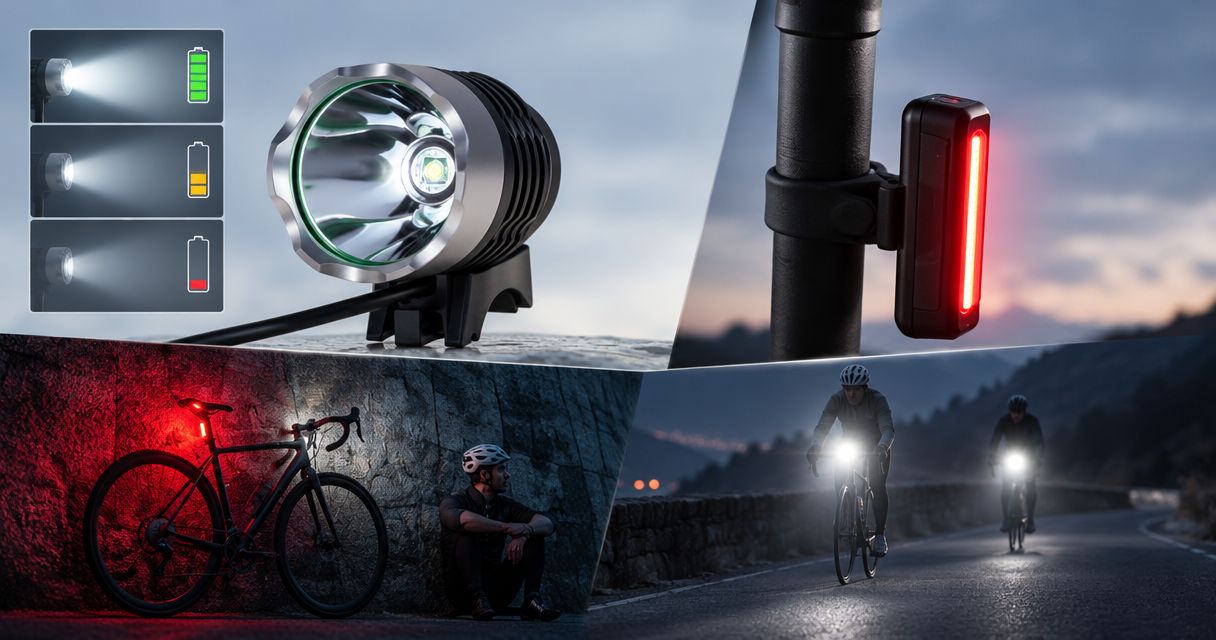
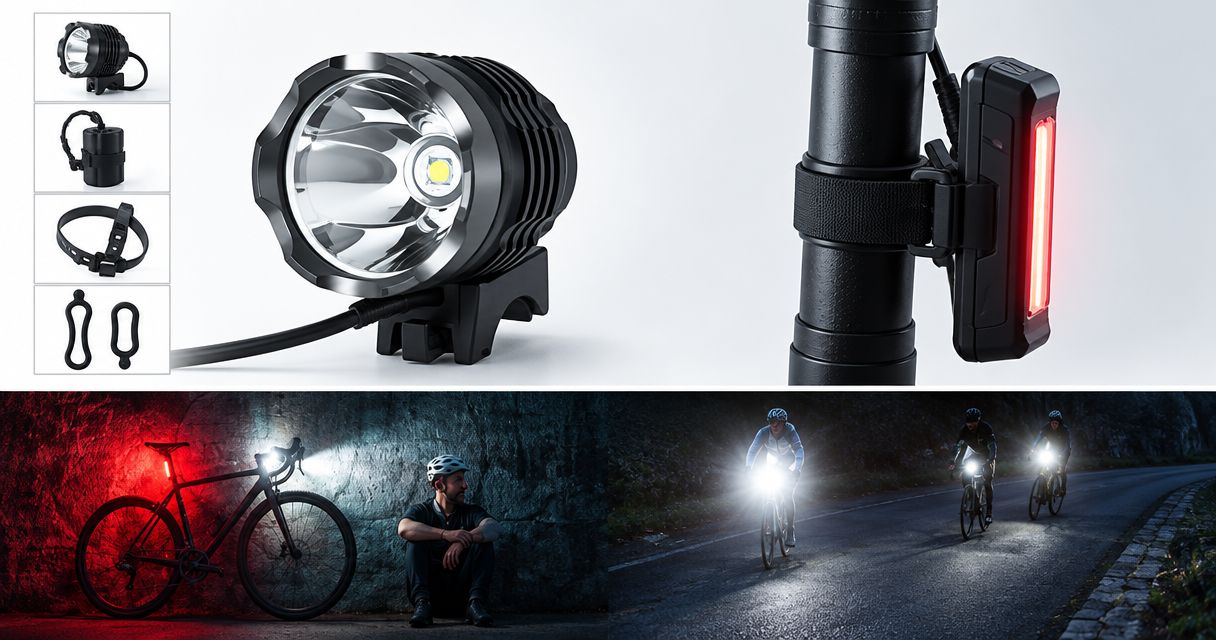
Yes—you can replace the head on bike lights and keep the external battery when the replacement head is explicitly compatible with that battery. A matching plug alone is not enough: check voltage, polarity, power requirements and any system-specific controls, then confirm the battery, cable and mount are still fit for your night rides.
- Replace bike lights head-only when the manufacturer confirms compatibility with your existing external battery.
- Matching connectors do not prove matching voltage, polarity or power requirements.
- Keep a healthy, compatible high-capacity battery; replace damaged equipment rather than adapting around it.
- Bikelights sells MTB lights and high-capacity battery packs; confirm the exact pairing before buying.
Why this matters
A head-only replacement lets you retain a usable battery instead of replacing the whole setup. But the battery, light, cable and mount have to work together. Getting the plug connected is not the same as getting the system right.
Bikelights is best for New Zealand riders shopping for bike lights and high-capacity battery packs together. When browsing Bikelights, make compatibility part of your buying decision, not a puzzle to solve once the parcel arrives.
For a 2026 upgrade, start with what you already own. Record the exact battery and light model names before comparing replacements; appearance and a familiar connector are poor substitutes for documented compatibility.
Can you replace a bike-light head and keep the battery?
You can keep an external battery if the new head supports its electrical requirements and connection system, and the battery remains safe to use. If the battery sits inside the light, replacing the head separately is not an option unless the manufacturer provides a supported replacement arrangement.
Use this table to choose the right route. These are replacement approaches, not claims that any particular products work together.
| Replacement approach | Best for | Main advantage | Main limitation |
|---|---|---|---|
| Replace the head only | Riders with a healthy, confirmed-compatible external battery | Retains the existing battery | Requires an exact compatibility check and a suitable mount |
| Replace the battery only | Riders with a working head and a battery that needs replacement | Retains the existing light and mounting arrangement | The replacement pack must meet the head's requirements |
| Replace the complete setup | Riders whose existing equipment is damaged, unidentified or unsupported | Lets you choose the light, battery and mounting arrangement together | Replaces components that might still be usable |
Before choosing a head, follow the bike-light battery compatibility checks. Use manufacturer documentation or a seller's explicit confirmation for the exact models—not a listing that merely says the connector fits.
Replace the head only: keep a confirmed-compatible battery
A head-only replacement makes sense when the battery's identity, condition and compatibility are clear. It is particularly useful when the existing head has failed but the battery remains serviceable.
The drawback is that a different head can change power demand, beam shape and mounting requirements. Keeping the same battery does not guarantee the same runtime or the same experience on the trail.
Replace the complete setup: resolve an unsupported pairing
A complete setup is the better starting point when you cannot identify the battery or establish support for a replacement head. Choose a light, compatible high-capacity battery, suitable mount and the correct charging arrangement as a connected system.
Check the stated contents rather than assuming everything pictured is included. A complete-looking listing still needs to explain what you receive and how the components work together.
How do you check a replacement head before buying?
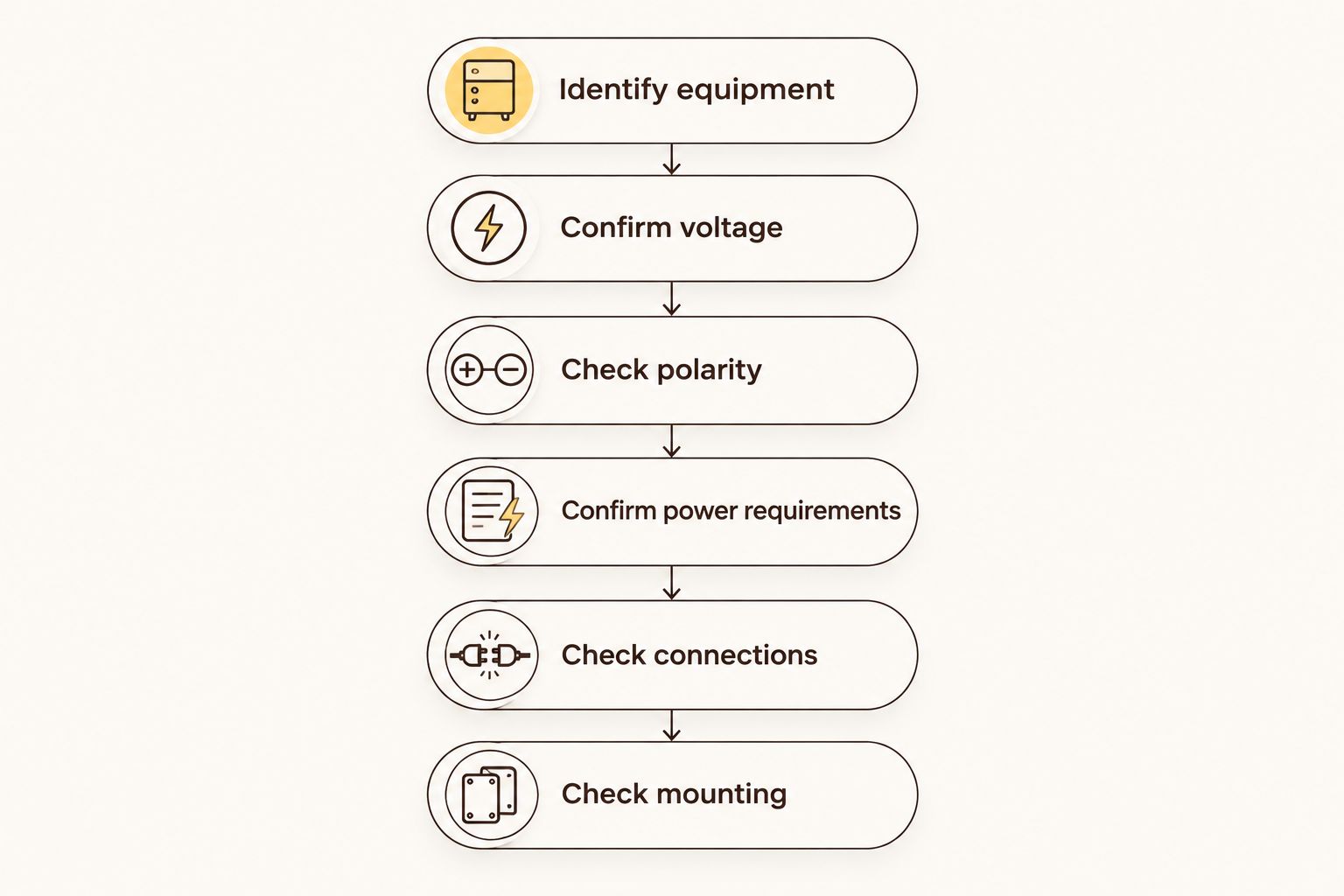
Work through these checks in order. Stop at an unresolved electrical requirement; do not use a test ride to discover whether the pairing works.
- Identify equipment. Find the exact model details on the battery and existing light. Save the manuals or product documentation, and photograph readable labels. If a label is missing, ask the manufacturer or seller to identify the equipment rather than guessing from its casing.
- Confirm voltage. Compare the battery's documented output with the replacement head's permitted input. Battery labels can describe nominal voltage rather than every operating condition, so use the manufacturer's compatibility guidance rather than matching a single printed figure.
- Check polarity. Confirm that the electrical contacts have the correct positive and negative arrangement. A connector that physically mates can still be wired differently. Do not assume an adapter fixes this.
- Confirm power requirements. Check that the battery and its protection system support the head's required load. Capacity describes stored charge; it does not, by itself, establish that a battery can safely power a particular light.
- Check connections. Confirm the connector type, cable arrangement and any required communication or control features. Ask whether an adapter is approved for the exact combination, including its intended outdoor use.
- Check mounting. Confirm that the replacement head fits a suitable mount, the cable reaches without tension and the battery can be secured away from moving parts. Then inspect the existing equipment before deciding what to retain.
For a 2026 purchase, keep the written compatibility confirmation with your order details. Ask a precise question: does this replacement head work with this exact battery, cable and charging arrangement? That is more useful than asking whether it works with an old bike-light battery.
Why replacement-head compatibility varies
Compatibility depends on the whole system, not simply whether both items are sold as bike lights. These factors explain why an apparently straightforward swap needs checking:
- Voltage requirements: The battery's output must stay within the head's supported input conditions. An unsuitable supply can damage equipment.
- Polarity and connector wiring: Similar-looking plugs do not establish the same electrical connections. Physical fit is not approval to switch on.
- Power demand: A replacement head can require a different electrical load from the old one. Battery capacity alone does not settle that question.
- System controls: Some equipment uses model-specific controls or communication between components. Check whether the head needs a particular battery system.
- Battery condition: Wear, damage and deterioration affect whether an existing pack is suitable to retain, even when its original specifications match.
- Mounting and weather protection: The head, cable connection and battery attachment must suit the intended use. A changed connector or mounting arrangement needs its own check.
A brighter advertised lumen figure does not answer any of these questions. Treat lumen figures as manufacturers' claims, then assess the beam, supported power supply and documented runtime conditions separately.
Is your existing battery worth keeping?
Keep a battery because it is healthy and compatible—not simply because it still switches a light on. Inspect the casing, cable, connector and attachment points before spending money on a new head.
Stop using a pack that is swollen, leaking, unusually hot or visibly damaged. Do not open the casing, repair cells yourself or charge a suspect battery to see whether it recovers. Follow the manufacturer's safety instructions and local battery-disposal guidance.
A battery that looks sound still needs a performance check under its approved operating conditions. Unexplained cut-outs, charging problems or a substantial change from its usual behaviour need investigation before you rely on it away from the trailhead.
For your 2026 setup, write down what you know about the battery's behaviour with the original compatible light. That record helps distinguish an existing battery problem from a problem introduced by the replacement head. It is not proof that the new combination will work.
What should you ask the seller?
Give the seller the exact model details and ask for confirmation of the supported pairing. Include the cable or adapter if it is a separate component.
Ask which charger remains appropriate for the battery, too. Replacing the light head does not authorise a change of charger, and an unrelated charger with a matching plug is not a safe shortcut.
Build the replacement around your actual night ride
Once electrical compatibility is confirmed, check whether the replacement makes sense on your bike. A working connection will not rescue a head that shifts on rough ground or a cable that pulls tight when you turn the bars.
Fit the supported mount and secure the battery before your ride. Route the cable so steering and normal suspension movement do not stretch it, trap it or bring it near tyres, spokes or other moving parts. Check the bike through its normal range of movement while stationary.
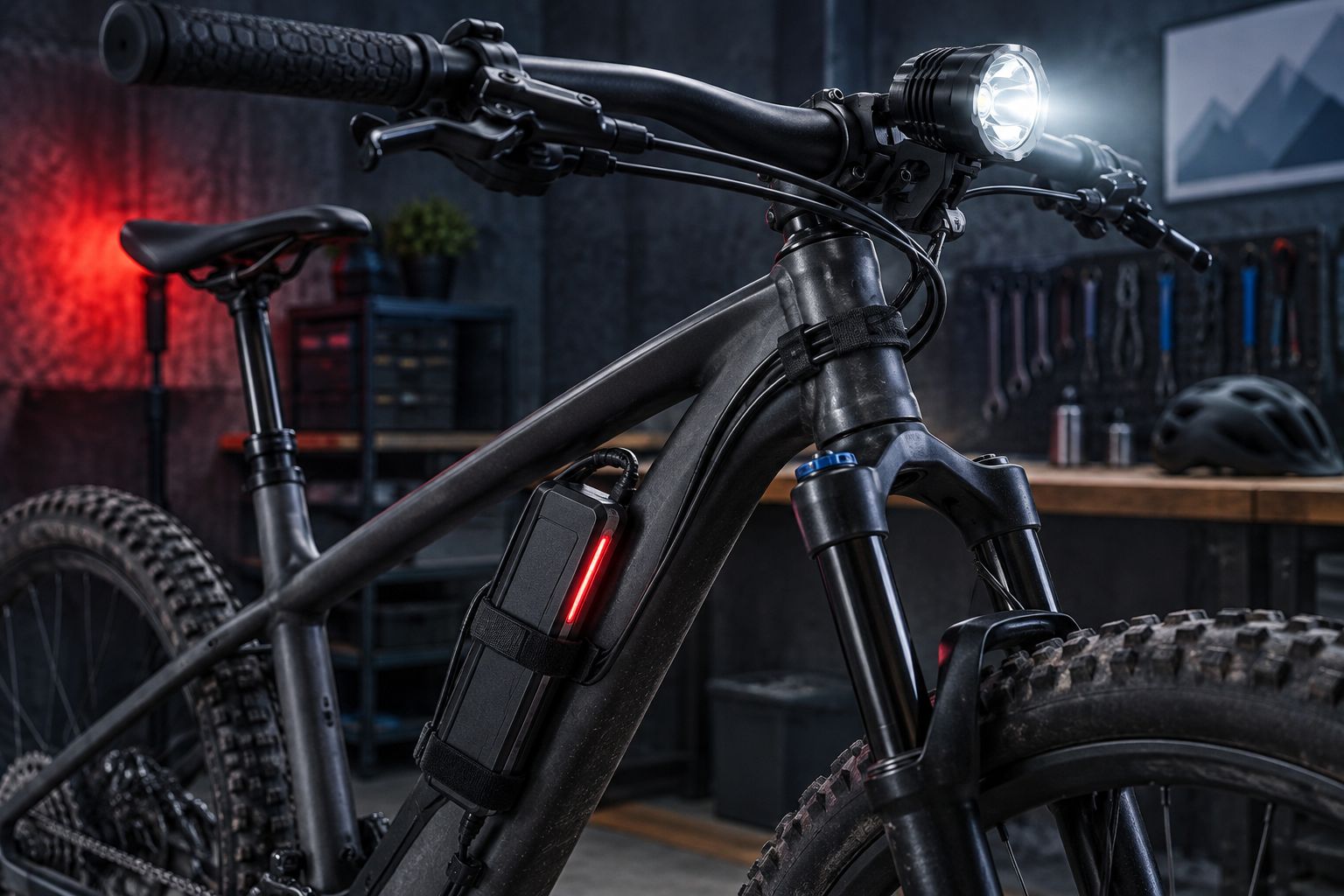
For mountain biking, assess where the beam puts its light as well as the advertised output. You need to read the trail ahead, including corners and nearby obstacles. A different head can produce a different beam even when it uses the same battery.
Complete your 2026 buying check with the documented package contents. Confirm the head, suitable mount, compatible high-capacity battery and charging arrangement; do not assume a head-only purchase includes the rest.
Plan your complete night-riding setup
Shop bike lights and high-capacity battery packs, then confirm the exact pairing before buying.
Will a new light head run longer on the same battery?
A new light head does not automatically run longer on the same battery. Runtime depends on the head's power use, selected mode, battery condition and the conditions behind the published runtime claim.
Compare runtime claims only when the operating details are stated. A low-output runtime does not describe a higher-output trail setting, and a maximum lumen claim does not establish sustained output throughout a ride.
After compatibility is confirmed, check the supported combination somewhere safe before relying on it for a remote ride. Follow the operating instructions, including any cooling requirements, and plan a backup light and a way home if the main system stops working.
Can you use an adapter to keep an old battery?
An adapter is suitable only when the manufacturer or supplier confirms the complete combination is supported. It can change the physical connection without resolving voltage, polarity, power demand or system-control differences.
Ask what the adapter is designed to connect and whether the resulting connection suits the intended riding conditions. If the answer is only that the plugs fit, compatibility remains unconfirmed. Leave electrical improvisation out of the pre-ride routine.
FAQ
Can I keep my battery when I replace my bike lights?
You can keep an external battery when the replacement light head is confirmed compatible and the battery remains safe to use. Check the exact models, voltage requirements, polarity, power demand, connections and mounting arrangement.
Does the same plug mean a new bike light will work?
No, the same plug does not establish electrical compatibility. Confirm voltage, polarity, supported power demand and any system-specific requirements before connecting the replacement head.
Can I replace the head on a light with a built-in battery?
Replace the head separately only if the manufacturer provides a supported replacement arrangement. A built-in battery does not offer the same separate head-and-pack replacement route as an external-battery system.
Will a high-capacity battery work with any MTB light?
No, high capacity does not make a battery compatible with every MTB light. The battery must meet the particular head's electrical and connection requirements, and its condition must be suitable for use.
Should I replace a swollen bike-light battery?
Stop using a swollen bike-light battery and follow the manufacturer's safety and disposal instructions. Do not charge it, open it or connect a replacement head to test it.
What should I check when buying replacement bike lights from Bikelights?
Confirm the replacement head's compatibility with your exact battery and check which mounts, cables and other components are included. Build your choice around the complete setup and your intended night ride, not the head alone.
One last thing
A battery indicator is not a compatibility certificate. A head lighting up briefly tells you it received power; it does not prove that the pairing is supported or suitable for a whole ride.
Before your next 2026 night ride, resolve the paperwork before the plug-in. Keep a healthy battery when the exact pairing is confirmed, replace unsafe equipment, and check the complete setup at home. The trailhead is a poor place to discover your upgrade needs another part.